


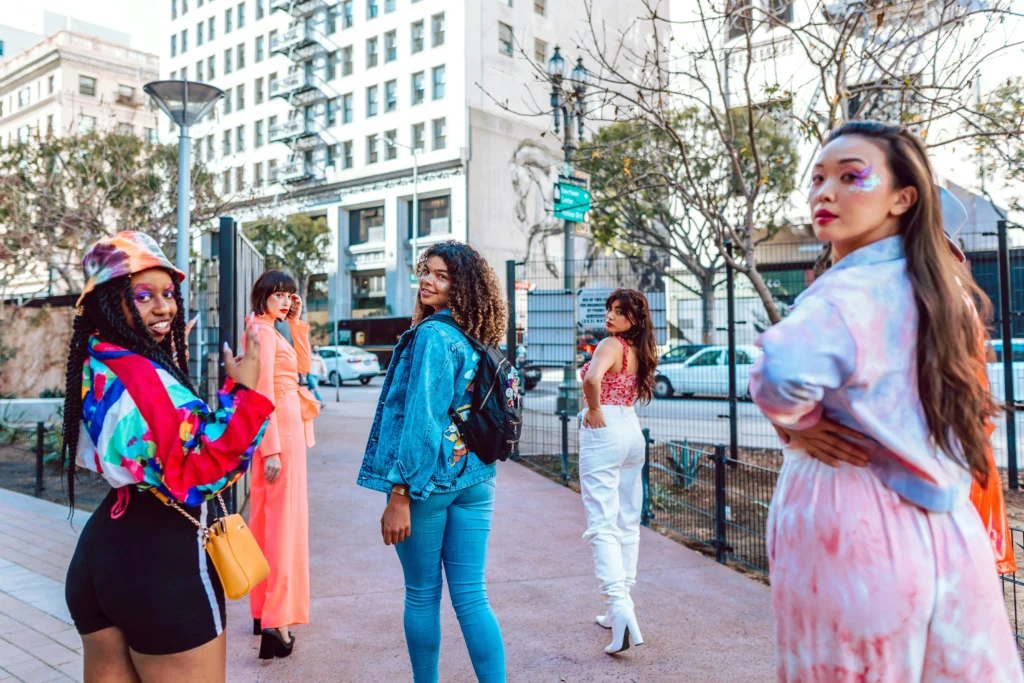
When people hear fashion manufacturers in Los Angeles, they usually imagine a single factory cutting and sewing garments from start to finish. But the reality we’ve learned at JustLabs is very different.
Los Angeles is not just a place with factories. It’s a living production ecosystem. A network of small, specialized teams working together to bring clothing to life.
In this blog, we want to take you inside that system (based on how we actually work with apparel manufacturers in LA every day).
LA Manufacturing Is Not One Factory
It is an entire Network.
One of the biggest misunderstandings about Los Angeles clothing manufacturers is that they operate like fully independent units.
In reality, most production runs through a chain of specialists:
- One team handles pattern making
- Another focuses on cutting
- Another does sewing and assembly
- Separate teams manage embroidery, printing, washing, or finishing
At JustLabs, we don’t think in terms of one factory doing everything. Instead, we think in terms of building the right production network for each project.
That’s what makes LA unique compared to many other production hubs.
How We Actually Work With Apparel Manufacturers in LA
When we start a new project, we don’t just “pick a factory.” We build a system around the product.
At JustLabs, our process usually looks like this:
We begin with sampling partners who specialize in early-stage development. These are the teams that can take a sketch or tech pack and turn it into something physical quickly.
Then we move into production partners who are better at scaling and handling consistency, bulk orders, and timelines.
Finally, we connect finishing specialists depending on the product:
- Streetwear might need heavy washing or dye effects
- Luxury pieces might need precise hand-finishing
- Basics need clean, consistent stitching at scale
This is where apparel manufacturers in LA stand out. They are flexible enough to plug into different parts of the process instead of controlling everything alone.
The Sampling Network: Where Everything Starts
If there’s one part of LA manufacturing most people underestimate, it’s sampling.
Sampling is not just “making a sample.” It’s where the entire product gets shaped.
In Los Angeles, sampling is often handled by highly experienced, small-scale teams who focus only on:
- Fit corrections
- Fabric testing
- Pattern adjustments
- Prototype development
These sampling rooms are deeply connected across the city. One sample room knows another cutter. One pattern maker knows a specific sewing team. It’s all linked through relationships, not directories.
At JustLabs, we rely heavily on these sampling relationships because they allow us to move fast without sacrificing accuracy.
This is something that defines fashion manufacturers in Los Angeles. Also, speed through connection, not scale alone.
Why Relationships Matter More Than Factories
In many global production systems, you work with one large factory that controls everything.
In LA, it’s different. Relationships are the system.
Over time, we’ve learned that production success depends more on who trusts whom than just technical capability.
For example:
- A pattern maker will only recommend cutters they trust
- A sewing team will prioritize projects coming from certain sampling rooms
- A finishing studio may only take work from partners they already know
This creates a quiet but powerful network effect.
At JustLabs, we don’t order production. We build relationships across multiple teams, so every project moves smoothly through the system.
That’s why American-made apparel manufacturing in LA feels more collaborative than transactional.
Why Los Angeles Works as a Production Ecosystem
There’s a reason LA became one of the strongest fashion production hubs in the US.
It’s not just geography. Its structure.
A few key reasons:
1. Specialization instead of centralization
Each team focuses on one part of production and becomes extremely good at it.
2. Fast communication loops
Because everything is local, changes happen quickly. A fit adjustment can move through the system in hours, not weeks.
3. Creative manufacturing culture
LA production isn’t just technical. It’s creative. Many Los Angeles clothing manufacturers are used to working with emerging designers and experimental ideas.
4. Strong sampling culture
Unlike many places where sampling is slow or limited, LA treats sampling as a core service, not a side process.
How We Navigate the LA Manufacturing Ecosystem at JustLabs
For us, working in LA is less about finding a factory and more about assembling the right production path.
Every project is different. Some need speed. Some need luxury detail. Some need experimentation.
So we build custom networks each time.
That might include:
- A sampling studio for early development
- A cut-and-sew team for production
- A specialist finishing partner for detail work
- And sometimes multiple rounds of adjustment between all of them
This is what makes LA manufacturing powerful but also complex.
And this is exactly where we come in.
At JustLabs, we don’t treat production as a single step. We treat it as a connected system of relationships across Los Angeles manufacturing partners.
How Projects Actually Move Through the LA System (Step-by-Step Reality)
One thing we’ve noticed at JustLabs is that most people don’t fully understand how a product actually moves through apparel manufacturers in LA once production begins.
It doesn’t follow a simple straight line. It moves through a connected system of specialists.
Step 1: Sampling Stage
Everything starts with a concept, sketch, or reference sample. This is sent to a sampling room where the first version is developed.
Most of the time, the first sample is not final. It goes through adjustments in:
- Fit
- Fabric behavior
- Construction details
This stage is very collaborative and usually involves multiple rounds of refinement.
Step 2: Development Refinement
Once the sample is closed, it still isn’t ready for production. It goes through back-and-forth development between different specialists.
Pattern makers adjust structure, sewing teams give feedback on construction feasibility, and small technical changes are made to improve execution.
This is where a lot of the real product shaping happens inside fashion manufacturers in Los Angeles.
Step 3: Production Coordination
After approval, production doesn’t go to one single place.
Instead, we coordinate between multiple teams depending on the garment:
- Cutting teams handle fabric preparation
- Sewing teams handle assembly
- Print or embroidery teams add details
- Finishing teams handle washes, trims, or final touches
This is what makes Los Angeles clothing manufacturers different. They operate as a connected network, not one facility.
Step 4: Final Assembly & Quality Control
Before delivery, everything comes back together for final checks.
We review:
- Stitch quality
- Fit consistency
- Color accuracy
- Overall construction
Only after this step is the product considered complete.
Why This System Works
The reason this entire process works is not just skill.
It’s coordination.
Each team in the system knows its role, and strong communication keeps everything aligned across different stages.
At JustLabs, our job is to make sure all these moving parts stay connected smoothly across the American-made apparel manufacturing network.
How to Evaluate Fashion Manufacturers in Los Angeles Before Starting Production
One of the biggest advantages of working within the Los Angeles manufacturing ecosystem is having access to a wide range of specialists. The challenge, however, is knowing which partners are actually right for your brand.
Many emerging brands make the mistake of choosing manufacturers based on price alone. Others focus only on location or turnaround time. In reality, finding the right manufacturing partner requires a much broader evaluation process.
The goal is not simply to find a factory.
The goal is to build a production network that supports your product quality, timeline, and long-term growth.
Start With Your Product, Not the Manufacturer
Before contacting any production partner, define exactly what you are trying to create.
Ask yourself:
- What type of garment are you producing?
- Is it luxury, contemporary, streetwear, activewear, or basics?
- What quantity do you need?
- What level of quality are you targeting?
- Do you require specialty finishes, embroidery, printing, or washing?
The clearer your answers are, the easier it becomes to identify manufacturers that align with your project.
A luxury wool coat and an oversized graphic hoodie may both be apparel products, but they often require completely different production specialists.
The Questions Every Brand Should Ask
Before working with a manufacturing partner, we recommend asking:
| Evaluation Area | Questions to Ask |
| Experience | Have you produced similar garments before? |
| Sampling | How many sample revisions are included? |
| Quality Control | What inspection processes do you use? |
| Communication | How are updates shared during production? |
| Capacity | Can you handle future growth if our orders increase? |
| Lead Times | What is the average timeline from sample approval to delivery? |
| Minimum Orders | What are your MOQ requirements? |
These conversations often reveal far more than a portfolio ever could.
Why Sample Quality Tells You Everything
One of the fastest ways to evaluate a manufacturer is through their samples.
A sample reveals:
- Construction quality
- Attention to detail
- Pattern accuracy
- Sewing consistency
- Fabric handling capabilities
When reviewing samples, don’t only focus on how the garment looks from the outside.
Look inside.
Check seam finishes.
Look for consistency in stitching.
Examine how cleanly the garment has been assembled.
Premium manufacturing often reveals itself through details customers never consciously notice.
The Role of Relationships in Manufacturing Success
One thing we’ve learned over the years is that manufacturing success rarely comes from a single company.
It comes from strong relationships between multiple specialists.
A great pattern maker often knows the right cutter.
A reliable sewing team often recommends trusted finishing partners.
A specialized wash house may work closely with certain production teams.
This interconnected structure is one reason Los Angeles remains such a powerful apparel manufacturing hub.
The strongest production systems are built on collaboration rather than isolation.
Manufacturing Readiness Checklist
Before beginning production, use this checklist:
Product Development
- Tech pack completed
- Fabric selections approved
- Fit finalized
- Measurements confirmed
Production Planning
- MOQ requirements understood
- Production timeline confirmed
- Costing approved
- Shipping expectations documented
Quality Control
- Sample approved
- Construction standards documented
- Inspection requirements defined
- Packaging requirements established
Long-Term Growth
- Reorder process discussed
- Capacity for future scaling confirmed
- Alternative suppliers identified if needed
Completing these steps early can prevent costly delays later.
Real Example: Why the Right Production Network Matters
We once worked with a brand developing a premium streetwear collection.
Initially, they approached production by searching for one factory to handle everything.
On paper, it seemed efficient.
In reality, the results were inconsistent.
The sewing quality was acceptable, but the washing effects lacked depth. The printing quality varied between runs. Communication slowed as more services were added under one roof.
Instead of forcing one partner to do everything, we rebuilt the production structure.
A dedicated sampling team handled development.
A specialized sewing partner managed assembly.
An experienced finishing partner focused solely on washes and garment treatments.
The product improved dramatically.
The designs didn’t change.
The production system did.
This is often the hidden advantage of the Los Angeles manufacturing ecosystem.
Why Brands Continue Choosing Los Angeles
While global manufacturing offers many options, Los Angeles remains attractive because of its flexibility.
Brands gain access to:
- Specialized expertise
- Faster development cycles
- Easier communication
- Strong sampling culture
- Greater production visibility
Most importantly, brands can build customized production paths instead of forcing every project into the same manufacturing model.
For emerging brands and established labels alike, that flexibility often becomes one of the most valuable resources available.
Looking for Guidance on Your Manufacturing Strategy?
At JustLabs, we help brands navigate the Los Angeles manufacturing ecosystem every day.
Whether you’re building your first collection, refining an existing product line, or preparing to scale production, we help connect the right people, processes, and production partners.
Our goal isn’t simply to manufacture garments.
It’s to build a production system that supports long-term growth, quality, and consistency.
If you’re exploring production in Los Angeles and want guidance on the next steps, contact JustLabs to discuss your project.
Final Thoughts
When people talk about fashion manufacturers in Los Angeles, they often think in terms of factories and output.
But what we experience at JustLabs is something deeper.
It’s a network built on:
- Trust
- Specialization
- Communication
- Long-term relationships
That’s what makes apparel manufacturers in LA different from most production systems around the world.
It’s not just manufacturing.
It’s an ecosystem, and once you understand it, you see why so many brands choose to build here.
FAQs
What is the main difference between fashion manufacturing in Los Angeles and other production hubs?
Unlike other production hubs that often rely on large factories that handle everything, Los Angeles operates as a network of specialized teams. Each team focuses on specific aspects of production, allowing for greater flexibility, speed, and creativity in the manufacturing process.
How does JustLabs approach working with apparel manufacturers in Los Angeles?
At JustLabs, we don’t simply pick a factory for production. Instead, we build a custom production network around each project, starting with specialized sampling partners and moving through various stages of production, ensuring that each aspect is executed by experts.
Why is sampling important in the LA manufacturing ecosystem?
Sampling is crucial because it’s where the entire product is shaped. In Los Angeles, experienced small-scale teams handle fit corrections, fabric testing, and prototype development, allowing for quick adjustments and ensuring the final product meets quality standards.
How do relationships affect production success in LA?
Relationships in the LA manufacturing ecosystem are vital. Trust between teams leads to better recommendations and prioritization of projects. This collaborative approach enhances the efficiency and quality of production, making it a key factor in the success of apparel manufacturing in LA.
What steps are involved in the production process at JustLabs?
The production process at JustLabs typically involves four key steps: 1) Sampling stage, where initial concepts are developed; 2) Development refinement, where adjustments are made; 3) Production coordination among specialized teams; and 4) Final assembly and quality control before delivery. This coordinated approach ensures high-quality results.
Pingback: Full package apparel Manufacturing in Los Angeles | JustLabs
Pingback: Clothing Manufacturers in Los Angeles for Luxury Brands
Pingback: Platforms to source Custom US Luxury Clothing Manufacturers